If you missed the 2024 RIDA Annual Summit, you missed one of the most comprehensive discussions on reducing insurance dependence ever assembled in one place. Over 4+ hours of content, expert speakers broke down systems, strategies, and the psychological shifts required to move from PPO dependence to practice freedom. Here's the complete breakdown of what you need to know.
The Central Truth: Systems Beat Guesswork
Every speaker at the summit reinforced one consistent message: reducing insurance dependence is not a gamble. It's not about dropping plans out of fear or following online trends. It's a systematic process with proven steps, measurable metrics, and real-world data.
The practitioners who succeed are not guessing. They're not making decisions based on Facebook threads or emotional frustration with insurance companies. They're following systems, tracking numbers, and making calculated moves.
Key Summit Principle
"Reducing insurance dependence is 100% possible when you follow a system. Not when you guess. Not when you panic-drop a plan."
This distinction matters profoundly. Practices that drop PPO plans emotionally often experience revenue cliffs they're unprepared for. Practices that follow systems experience smooth transitions, maintained cash flow, and ultimately greater profitability.
The Hidden Cost: Understanding PPO Write-Offs
One of the most striking revelations from the summit was how many dentists don't realize the true cost of PPO participation. The data is striking: PPO write-offs quietly consume 40-55% of practice production in many cases.
This isn't hyperbole. These are real numbers from real practices. A practice producing $2 million might only collect $1.4 million—not due to any clinical failure, not due to patient dissatisfaction, but purely because of PPO fee schedules and contractual write-offs.
The summit emphasized that insurance is not your business model—it's a payment option. As long as dentists believe that taking all PPO plans keeps schedules full, that dropping a plan means losing patients, or that their town is "too competitive" to change, they remain trapped.
But when dentists calculate actual write-offs, that mindset shifts. They see that staying in 20-25 (or even 30) PPO plans isn't safety—it's slow financial decline.
Membership Plans: The Buffer Strategy
Insights on Membership Plans
Jordan Comstock presented one of the most talked-about sessions of the summit, focusing on membership plans as the strategic foundation for reducing PPO dependence.
The membership plan conversation came alive with real numbers. Practices in the summit audience shared that they have hundreds of active members, generating $200,000-$300,000 annually in recurring membership revenue alone. This is not peripheral income—it's the buffer that makes PPO reduction possible.
The elegance of membership plans becomes clear in the numbers: patients who invest in plans use more of the benefits. They stay loyal longer. They buy additional services beyond the plan. A patient who's already paying for unlimited whitening or perio maintenance is more likely to accept a comprehensive restorative case because they're mentally invested in the practice.
Creative Membership Structures
The summit revealed that membership plans extend far beyond simple preventive plans:
- Unlimited whitening plans (cosmetic retention)
- Perio maintenance memberships (deep pocket management)
- Botox and injectables memberships (ancillary revenue)
- Pediatric membership tiers (family lifetime value)
- Specialty memberships (implant maintenance, ortho retainers)
What made this discussion revolutionary is the realization that membership plans aren't just retention tools—they're case acceptance engines. A patient paying $600/year for unlimited whitening is psychologically committed. They want to use those benefits. They're more receptive to other treatment recommendations.
The Five Mistakes That Hold Practices Back
Gary Takacs' Five Critical Mistakes
Gary Takacs, who has coached over 400 practices through PPO resignation, presented the most common mistakes he observes.
Understanding what doesn't work is often more valuable than knowing what does. The summit identified five specific mistakes that derail practices attempting to reduce insurance dependence:
Mistake 1: Transactional vs. Relational Practices
Many practices operate transactionally. Patients come in for specific services, get treatment, and leave. There's no deep relationship, no sense of partnership, no loyalty that transcends insurance participation.
Practices that successfully reduce PPO dependence shift to relational models. The practice becomes a partner in the patient's health, not a vendor providing services. This distinction matters enormously when asking patients to choose to stay without insurance coverage.
Mistake 2: Not Understanding PPO Data
Practices that fail don't know their own numbers. They don't calculate actual write-offs. They don't know which PPO plans are worst-performing. They make emotional decisions based on incomplete information.
Successful practices have ruthless data clarity. They know exactly what each PPO plan costs them. They know which plans are worth keeping and which are actively destroying profitability.
Mistake 3: Dropping Plans Without Marketing
This is catastrophic. Many practices think "We'll just stop taking this insurance and patients will stick with us." Then revenue collapses and they panic.
Successful practices implement marketing and relationship systems before dropping plans. They're building new patient flow through other channels even while dependent on PPO-referred patients. When they drop the plan, patient acquisition from other sources already replaces much of the loss.
Mistake 4: Undertraining the Team
Your team's messaging about insurance changes is critical. If team members communicate uncertainty or frustration, patients sense it. If they communicate confidence and clarity, patients trust the transition.
Practices that succeed invest heavily in team training before and during the transition. Everyone understands the "why," can explain benefits clearly, and exudes confidence in the new model.
Mistake 5: Poor Patient Communication
How you communicate about insurance changes determines patient response. Vague communication ("We might be making some changes") creates anxiety. Clear communication ("We're building something better for you") creates buy-in.
The summit emphasized that every dollar of insurance write-off is essentially money you paid the insurance company for marketing. Once you stop relying on PPOs, you need to own the marketing engine yourself—and you can do it more efficiently than insurance networks.
Operations Panel: The Hidden Cost of Inefficiency
The operations panel revealed costs most dentists don't track. Lisa Copeland discussed how team communication and leadership unconsciously send mixed signals during insurance transitions. When leadership seems uncertain, teams hesitate, and patients feel it.
Shams discussed the massive time drain of claims management: appealing denials, resubmitting codes, managing unpaid balances. Many practices waste hours weekly on insurance administration. In fee-for-service practices, that time disappears—freeing capacity for additional clinical work or improved patient experience.
Art Wiman, a CPA, shared real practice examples: a $2 million producer collecting only $1.4 million due purely to PPO agreements. Seeing these examples was transformative for attendees. Abstract numbers become real when you see actual practices losing $600,000 annually to write-offs.
The Psychology of Fear and Data
The summit devoted significant time to the emotional side of reducing PPO dependence. When change feels dangerous, the fear center of the brain takes over. Dentists start catastrophizing: "My patients will leave. My staff won't support this. My schedule will empty."
But fear evaporates when it meets data. The moment dentists calculate actual write-offs, admin costs, and collections per hour, logic returns. They realize that the old model wasn't secure—it was declining slowly. The new model, properly executed, is actually more secure.
Marketing: The Foundation for PPO Independence
Lester De Alwis addressed a critical question that many practices worry about: "Is SEO dead? Will AI replace Google?"
The answer is clear: no. Google still drives most discovery and new patient calls. But search behavior is evolving. AI overviews, ChatGPT, Perplexity, and other AI engines are real. Patients use them. They matter.
The marketing rules that enable PPO independence are straightforward:
- Show up everywhere people look. Not just Google's classic links, but Google Maps, AI overviews, AI mode, and conversational AI platforms.
- Measure success by calls and booked visits, not traffic. Vanity metrics don't matter. New patients who actually schedule and show up matter.
- Membership plans plus strong visibility create stability during PPO transitions. You're not choosing between membership plans and marketing—you're implementing both simultaneously.
The key insight: marketing is not a luxury when reducing PPO dependence. It's the engine that gives you freedom. It replaces the patient flow that insurance networks provided, and it does so more efficiently and with better quality patients.
Patient Communication: Guiding With Confidence
The Patient Mindset Shift
Sina addressed one of the most important aspects of PPO reduction: teaching patients that insurance doesn't determine care quality.
Patients have been conditioned to think: "If my insurance covers it, I should do it. If it doesn't, I shouldn't." This is completely backwards. Insurance shouldn't determine clinical care. Insurance should help pay for clinically indicated treatment.
Team members need to communicate this distinction confidently. They need to explain benefits, limitations, and why insurance policies don't match clinical recommendations. When patients understand that the dentist's recommendation is based on health (not insurance coverage), they trust the recommendation more.
The teams that succeed during PPO transitions are those that guide patients with both confidence and kindness. Not pushy. Not apologetic. Clear. Supportive. Confident in the value being offered.
The Unified Framework: Why These Elements Work Together
The summit's power came from showing how all these elements interconnect:
- Systems and data replace fear and guesswork
- Membership plans create recurring revenue stability
- Avoiding five critical mistakes prevents catastrophic failure
- Operations efficiency reduces costs during transitions
- Psychology shifts dentists from fear to logic
- Marketing replaces insurance networks as patient acquisition engine
- Clear patient communication builds trust during change
Practices don't succeed by doing one thing right. They succeed by implementing systems across multiple dimensions simultaneously.
The Bottom Line: Three Core Truths
What the 2024 Summit Taught Us
1. PPO dependency is not your destiny. Write-offs are not just math—they are missed opportunities. You can change this.
2. The transition is systematic, not risky. When you follow the system, you see predictable results. You don't have to guess or gamble.
3. You don't do this alone. The practices that succeed have coaching, mentorship, accountability, and community support. You don't have to figure this out in isolation.
Your Next Steps
If the summit inspired you or opened your eyes to what's possible, here's what to do now:
- Calculate your current PPO situation. What percentage of collections come from PPOs? What are your write-off percentages? What is your actual collections per hour?
- Identify your specific problem. Is it truly PPO dependence? Or is it overhead creep, low case acceptance, poor scheduling efficiency, or another issue? The summit showed that not every problem is an insurance problem.
- Build your plan. Don't drop all PPOs at once. Model scenarios. Build cash reserves. Create a phased approach with specific milestones.
- Get support. This isn't something to do alone. Work with mentors, coaches, and communities that understand dental practice transformation.
Ready to Reduce Your PPO Pressure?
The 2024 RIDA Summit proved what's possible. Now it's your turn to build a practice with more control, more predictability, and more freedom.
Schedule Your Coaching Call TodayGet Access to Summit Resources
Join practitioners who are implementing these systems. Get templates, frameworks, and ongoing mentorship to reduce PPO dependence in your practice.
This article summarizes key insights from the 2024 RIDA Annual Summit. For the full discussion, listen to Episode 372 of the Less Insurance Dependence Podcast, which provides a comprehensive recap of all speakers and sessions.
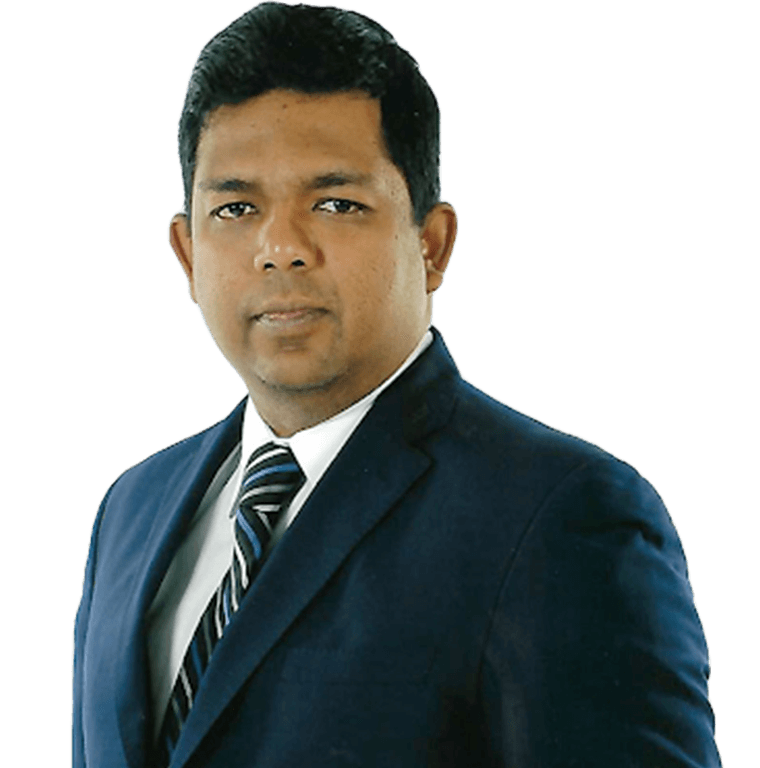
Reviewed by
Naren Arulrajah
CEO & Founder, Ekwa Marketing
Naren Arulrajah is the CEO and Founder of Ekwa Marketing, a 300-person dental marketing agency that has helped hundreds of practices grow through SEO, reputation management, and digital strategy. A published author of three books on dental marketing, contributor to Dentistry IQ, co-host of the Thriving Dentist Show and the Less Insurance Dependence Podcast, and a member of the Academy of Dental Management Consultants. He has spent 19 years focused exclusively on helping dental practices succeed online.