Is your hygiene department a loss leader or a profit center? Many dentists believe hygiene is a drain on practice profitability. But this belief isn't based on reality—it's a mathematical consequence of PPO contract fees. Discover why hygiene-driven practices thrive in fee-for-service models and struggle under PPO restrictions.
The Widespread False Belief
In dental practice owner groups, a common sentiment emerges: "The more I grow my hygiene department, the more money I lose." This belief is so pervasive that owners often deliberately keep hygiene departments small—putting a metaphorical blanket over it and hoping it goes away.
But here's the fundamental flaw in this thinking: If hygiene truly was a loss leader, why would any business owner want it to grow? You wouldn't deliberately grow a department that loses money. The fact that this belief persists reveals something important: it's not hygiene that's the problem. It's the PPO contract fees that make hygiene appear unprofitable.
Why This Belief Persists
Dentists experience this "loss leader" reality firsthand. They see hygiene revenue appear small compared to hygiene costs. They see expanding the hygiene department correlate with lower profitability. The conclusion feels obvious: hygiene is a loss center.
But the real culprit is invisible in the daily numbers: PPO fee schedules. When you contract to provide hygiene services for 40-50% discounts, the math becomes nearly impossible. No margin exists for profitability.
The Hidden Value of Hygiene: The Flywheel Effect
Before we address the financial math, understand what hygiene actually does in a thriving practice:
Patient Health Benefit
More hygiene appointments means:
- Earlier detection of disease
- Reduced future dental expenses for patients
- Better overall oral health outcomes
- Healthier patient relationships
This isn't just good clinical care—it's good business. Healthy patients have fewer emergencies, higher case acceptance, and greater loyalty.
Production Correlation
The most important relationship: more hygiene appointments directly drive more doctor production. Through hygiene exams and consultations, patients discover treatment they need or want. These discoveries lead to restorative production on the doctor's schedule.
The math is simple: more hygiene = more treatment opportunities = more doctor production. This is the "flywheel effect" described in business literature. Once the machine starts spinning, momentum builds on itself.
Practice Balance
In a thriving practice, one-third of total production comes from hygiene. This distribution:
- Reduces the burden on the doctor to generate all production
- Creates a more balanced, sustainable business model
- Allows the doctor to focus on complex restorative cases
- Provides a more interesting case mix
The "Third, Third, Third" Profit Model
Here's the financial framework that defines a profitable hygiene department:
The Hygiene Profitability Model
Third 1
Hygienist Salary
Third 2
Related Overhead
Third 3
Pure Profit
In a properly functioning hygiene department, each third is equal. If you can achieve this ratio, your hygiene department is highly profitable.
Calculating What Hygiene Needs to Produce
Let's work through realistic numbers. Assume:
Hygienist hourly wage: $50/hour (national average; could be higher or lower in your area)
Hygiene work hours per day: 8 hours
Hygienist daily cost: 50 × 8 = $400
Required daily collections (third/third/third): $1,200
This means: $400 to hygienist, $400 to overhead, $400 to you
What PPO Fees Actually Pay
Now consider what PPO plans reimburse for typical hygiene services:
| Service | UCR Fee | PPO Payment | Discount |
|---|---|---|---|
| Prophylaxis (Adult) | $150-200 | $80-120 | 40-50% |
| Periodontal Therapy | $250-400 | $120-180 | 45-55% |
| Intraoral X-rays | $80-120 | $40-60 | 40-50% |
| Fluoride Treatment | $50-100 | $25-50 | 45-50% |
The Impossible PPO Hygiene Math
Here's where the "loss leader" belief comes from. Let's calculate a typical day in a PPO practice:
Scenario: Your hygienist works 8 hours and sees 4 patients (standard schedule)
What they produce (UCR): 4 × $150 = $600
What PPO actually pays: 4 × $90 = $360
Cost to you: $400 (hygienist salary)
Daily Loss: $40 (and you haven't paid overhead yet)
In this scenario, you're actually losing money on hygiene before overhead expenses. Your intuition that "hygiene is a loss leader" is mathematically correct—but only in a PPO practice.
The Urban Area Crisis
In major metropolitan areas (San Francisco, Seattle, Chicago, New York, Miami), the situation is even worse. Hygiene wages have risen to $55-70+ per hour due to competitive labor markets. In some urban markets, the hourly wage for a hygienist exceeds the hourly revenue generated by a PPO patient.
In these locations, you're literally losing money the moment a hygiene patient sits down.
The Fee-for-Service Solution
Now watch the same scenario in a fee-for-service practice:
Scenario: Your hygienist works 8 hours and sees 4 patients
What they produce (UCR, collected in full): 4 × $150 = $600
Cost to you: $400 (hygienist salary)
Remaining for overhead & profit: $200
Status: Moving toward profitability (with more optimization)
The numbers immediately improve. Without the 40-50% PPO discount, you have actual margin to work with. Add more productivity or optimize your scheduling, and the department becomes genuinely profitable.
Can You Have a Hygiene-Driven PPO Practice?
The Direct Answer
Technically, yes. But it's "very difficult" and requires extreme measures that often compromise quality.
The Assisted Hygiene Model
Some PPO practices attempt to make hygiene work by using an "assisted hygiene" model:
- One hygienist is assigned to oversee multiple operatories
- Dental assistants perform much of the clinical work
- Goal: See 12-16 patients daily instead of 8
- Result: Increased productivity can offset lower per-patient fees
The Quality Trade-Off
The problem: this model often sacrifices quality and patient experience.
- Patients feel rushed and "hustled in and out"
- Clinical outcomes may suffer from reduced time
- The personal relationship with patients diminishes
- Team satisfaction often declines
You may achieve the financial numbers, but you're not building the thriving practice you want. You're building an assembly line.
The Real Solution: Transition to Fee-for-Service
The answer to "Can I have a hygiene-driven practice while on PPO plans?" is really "No, not really—and here's why you shouldn't try."
The Transformation Path
Step 1: Acknowledge that PPO fees prevent hygiene from being profitable.
Step 2: Recognize that dropping PPO plans doesn't just help your bottom line—it enables you to create a hygiene-driven practice that's both profitable AND maintains quality.
Step 3: Make the transition. The RIDA (Reducing Insurance Dependence Academy) Summit teaches the six-step framework for successfully dropping PPO plans.
What Changes When You Go Fee-for-Service
Once you eliminate PPO fee restrictions, you can:
- Build a true 1/3 production model (1/3 from hygiene)
- Pay hygienists competitive wages without guilt
- Invest in technology and comfort that patients appreciate
- Schedule patients at a pace that allows quality and relationships
- Transform hygiene from a perceived loss center into an obvious profit center
The Downward Spiral vs. The Flywheel
The business concept of the "flywheel" comes from Jim Collins' "Good to Great." A 5,000-pound flywheel requires enormous effort to get moving, but once you achieve momentum, it moves on its own.
The Downward Spiral (PPO Model)
In a PPO practice with low hygiene fees:
- You keep hygiene small to minimize losses
- Fewer hygiene appointments means fewer treatment opportunities
- Doctor's schedule becomes less full
- Practice profitability declines
- You're trapped in a downward spiral
The Profitable Flywheel (Fee-for-Service Model)
In a fee-for-service practice with proper hygiene fees:
- Hygiene generates profit, so you grow it
- More hygiene appointments create more treatment opportunities
- Doctor's schedule fills with quality restorative cases
- Practice profitability increases exponentially
- The machine becomes self-sustaining
This is why dentists in fee-for-service practices often report their only regret is not making the transition sooner. They're operating a completely different business model.
Reframing Hygiene as a Practice Driver
The first step to changing your reality is changing your mental model. Stop thinking of hygiene as a loss leader. Start thinking of it as a practice driver.
Shift Your Mindset
Old belief: "The bigger my hygiene department, the more money I lose."
New belief: "Hygiene is a critical engine of practice success. The better it performs, the better the entire practice performs."
The Proof Is in Your Colleagues
Look at dentists who've successfully gone fee-for-service. Ask them about their hygiene department. Virtually every one will tell you: it's their most profitable segment. They've built a 1/3 production model. Their hygiene produces beauty and profit simultaneously.
Your Path Forward
If you're currently trapped in the "hygiene is a loss leader" belief, recognize this: that's not an inherent truth about hygiene. That's a mathematical consequence of PPO contract fees.
The solution isn't to manage around it with assisted hygiene models. The solution is to eliminate the constraint. Drop the PPO plans. Watch your hygiene department transform from perceived liability to obvious asset.
Build Your Hygiene-Driven Practice
Discover the complete framework for transforming hygiene into your most profitable practice segment.
Get the Hygiene Profitability Calculator
This article is based on expert insights from Gary Takacs and Naren Arulrajah, dental practice transformation leaders at RID Academy. Learn more at the Less Insurance Dependence Podcast.
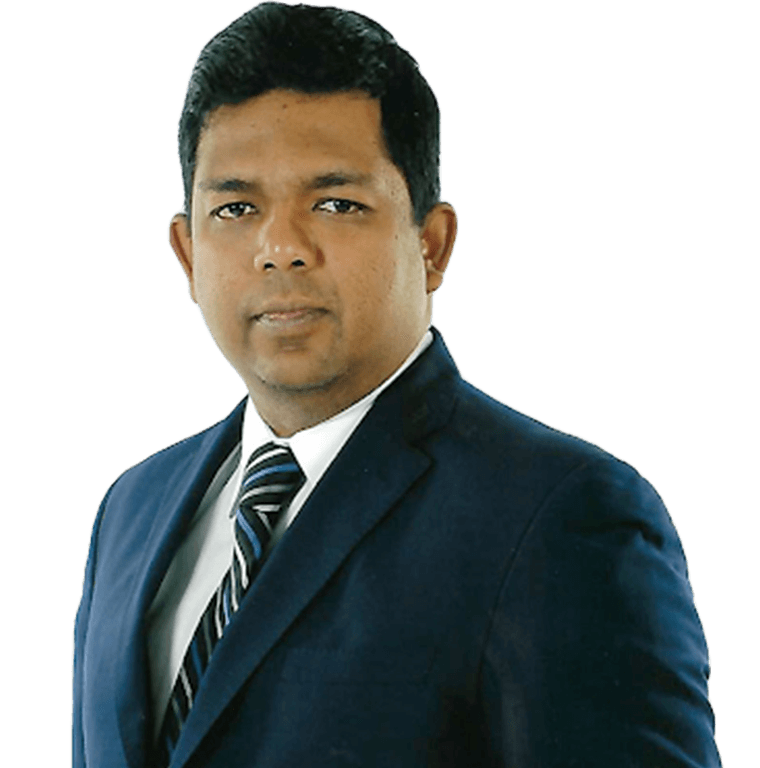
Reviewed by
Naren Arulrajah
CEO & Founder, Ekwa Marketing
Naren Arulrajah is the CEO and Founder of Ekwa Marketing, a 300-person dental marketing agency that has helped hundreds of practices grow through SEO, reputation management, and digital strategy. A published author of three books on dental marketing, contributor to Dentistry IQ, co-host of the Thriving Dentist Show and the Less Insurance Dependence Podcast, and a member of the Academy of Dental Management Consultants. He has spent 19 years focused exclusively on helping dental practices succeed online.