What can a pioneering 20th-century dentist teach us about succeeding in today's insurance-dominated landscape? Dr. Lindsey D. Pankey's timeless principles provide a blueprint for building thriving, relationship-driven practices that thrive outside insurance networks.
The Legacy of Dr. Pankey: The Father of Modern Restorative Dentistry
Many consider Dr. Lindsey D. Pankey the father of modern restorative dentistry. This isn't an exaggeration. Before his time, dentistry was primarily the art of tooth extraction. When people developed dental problems, dentists simply removed the tooth. Dr. Pankey envisioned something better: saving teeth whenever possible and restoring them to full function and health.
This vision wasn't abstract philosophy. It was born from personal tragedy. Dr. Pankey's mother had all her teeth extracted at age 40—a common practice of the era. He witnessed firsthand the devastating consequences of tooth loss on her health and quality of life. She watched her facial structure deteriorate, experienced difficulty eating, and suffered from the psychological impact of being without natural teeth.
This experience transformed Dr. Pankey's approach to dentistry. He made a solemn commitment: he would never extract a tooth that could be saved. For the rest of his career, he honored this commitment. He would extract only when preservation was impossible. This bold commitment drove innovation, excellence, and a deep commitment to patient welfare that defined his entire career.
Today, as you consider dropping PPO plans and building a more independent practice, Dr. Pankey's philosophy offers crucial guidance. His principles transcend eras—they apply just as powerfully to modern practice management as they did to his revolutionary restorative techniques.
The Four Principles for Successful Insurance Independence
Dr. Pankey's philosophy can be distilled into four essential principles that form the foundation for successfully reducing insurance dependence:
1Know Yourself
Understanding Your Values and Goals
Dr. Pankey's commitment to saving teeth began with knowing himself—his values, his purpose, and what he wanted his career to represent. Modern dentists face a similar choice.
Many dentists describe their PPO practice as being on a treadmill. They must operate at high speed, processing many patients through the practice to make the economics work. Insurance reimbursements demand volume because individual case fees are insufficient. This creates a relentless pressure to keep pedaling faster.
But is this treadmill consistent with who you are and what you want your career to be? Many dentists answer honestly: "No. I want to slow down. I want to spend more time with patients. I want to build relationships, not just process transactions."
The challenge is that when you're on the PPO treadmill, you can't slow down without suffering financial consequences. The economics don't allow it. So you remain trapped between your reality and your aspirations.
Knowing yourself means answering these questions:
- Am I a dentist who wants to make a difference in patients' lives and build lasting relationships?
- Do I want to leave a legacy of excellent dentistry and patient care?
- Or have I accepted dentistry as "just a job," primarily about income?
- What kind of life do I want to live? Can I achieve that within my current practice model?
Most dentists listening to this are in the first category. They entered dentistry to help people, to do excellent work, to make a difference. If this describes you, understanding yourself creates the motivation for change.
2Know Your Work
Committing to Excellence and Quality
Dr. Pankey built his career on an unwavering commitment to quality dentistry. Every restoration, every treatment, every case was approached with meticulous attention to excellence. This commitment distinguished his work and built his reputation.
For modern practices, knowing your work means committing to quality as the foundation of everything you do. Here's why this matters: If you don't do quality dentistry, your entire practice is built on quicksand. You'll inevitably face failures, redo's, remakes, and warranty work. This creates a frustrating cycle that undermines profitability and satisfaction.
Quality dentistry is non-negotiable. It's the foundation. But here's a critical insight: Does your PPO network support your commitment to quality dentistry?
The Answer Is No. The PPO network is economically structured to work against quality. Consider:
- PPO reimbursement rates incentivize speed, not quality
- Insurance limitations restrict your material choices and treatment options
- Fee limitations prevent you from taking the time necessary for your best work
- Administrative burdens distract from clinical focus
When you know your work and commit to excellence, reducing insurance dependence becomes not just a business strategy—it becomes a way to practice dentistry with integrity. You can use the materials you believe are best. You can take the time your work deserves. You can prioritize patient outcomes over insurance company requirements.
3Know Your Patients
Building Relationship-Driven Care
Dr. Pankey's career was built on intimate knowledge of his patients. He understood their needs, their fears, their values. This knowledge informed his treatment approach and built deep trust.
In modern practice, knowing your patients means moving beyond transaction-based care toward relationship-driven care. This is one of the most powerful differentiators when you go out of network. When patients feel known, cared for, and valued, they choose to stay—regardless of network status.
But here's the challenge: PPO networks don't encourage this. In fact, they work against it. The economic model demands volume. To make reasonable income, you must see many patients. The time you need to genuinely know each patient isn't factored into the PPO fee structure.
A Historical Perspective on Insurance Coverage
Understanding the history of dental insurance illuminates this problem. Delta Dental of California was the first dental insurance company, created by dentists for dentists. They had a noble purpose: help more people access dental care. When they established a $1,000 annual benefit in 1968, this covered significant dentistry.
In 1968, a crown cost about $150. With 50% coverage, insurance paid $75 per crown. A patient's $1,000 annual benefit covered approximately 13-14 crowns—substantial restorative work. Today, that same $1,000 (sometimes increased to $1,200-1,500) covers barely one crown if a root canal is needed.
What changed? Dental costs increased dramatically. Insurance benefits stagnated. The result: your patients are increasingly frustrated with their insurance coverage. They're not getting the care they need because their benefits are exhausted. This creates tension and dissatisfaction.
When you operate out of network, you can have honest conversations with patients about their full treatment needs. You're not constrained by arbitrary insurance limits. You can work with them on payment options that allow them to get necessary care. These conversations build trust and strengthen relationships.
4Apply Your Knowledge
Taking Strategic Action
Dr. Pankey's final principle was about application—taking knowledge and transforming it into action. Understanding his principles meant nothing without implementing them in daily practice.
For you, applying this knowledge means taking concrete steps toward insurance independence. This isn't someday. This isn't in theory. This means now, with specific actions:
- Know yourself: Get clarity on your values and goals. Write them down. Share them with your team and family. This clarity becomes your north star during the transition.
- Know your work: Invest in continuing education. Upgrade your technology. Implement systems that support quality. Track your clinical outcomes. Let quality become your competitive advantage.
- Know your patients: Implement systems to build relationships. Learn patient names. Conduct patient interviews. Track patient preferences and concerns. Create an environment where patients feel valued as people, not transactions.
- Apply your knowledge: Develop a strategic plan. Work with a coach or consultant who understands this transition. Build your marketing. Communicate with patients. Take imperfect action rather than waiting for perfect conditions.
The practices that successfully transition out of network aren't waiting for the perfect moment or perfect circumstances. They're making imperfect action while learning and adjusting along the way.
The Question That Changes Everything
Gary Takacs, a practice coach who has guided over 2,200 dentists through this transition, asks his clients a powerful question:
"If you had the choice to start your practice today, would you start it in the PPO network?"
Most dentists answer honestly: "No. I would start independent. I would build relationships. I would focus on quality. I would build a thriving practice, not an insurance-dependent one."
If your answer is the same, then Dr. Pankey's principles point toward a clear path: Know yourself, know your work, know your patients, and apply your knowledge through strategic action.
Implementation Begins Now
You don't need to go out of network tomorrow. But you can begin building the foundation today. Start with knowing yourself more deeply. What do you want your practice to be? What impact do you want to have? What kind of life do you want to live?
Once you know yourself, the other three principles follow naturally. You commit to quality work. You build genuine relationships with patients. You take strategic action toward your vision.
Dr. Pankey's legacy isn't just about restorative dentistry technique. It's about practicing dentistry with purpose, integrity, and excellence. These principles apply whether you're in-network, out-of-network, or somewhere in between. They form the foundation for a thriving, fulfilling practice.
Ready to Apply These Principles?
Get personalized guidance on building your practice strategy and reducing insurance dependence.
Schedule a Strategy Meeting with Gary TakacsFree Implementation Guide: Dr. Pankey's 4 Principles for Your Practice
Discover how to apply these timeless principles to your practice strategy today.
This article is based on insights from the Less Insurance Dependence Podcast, Episode 191, featuring Gary Takacs and Naren Arulrajah, and drawing from the foundational principles of Dr. Lindsey D. Pankey. Listen to the original episode →
Reviewed by
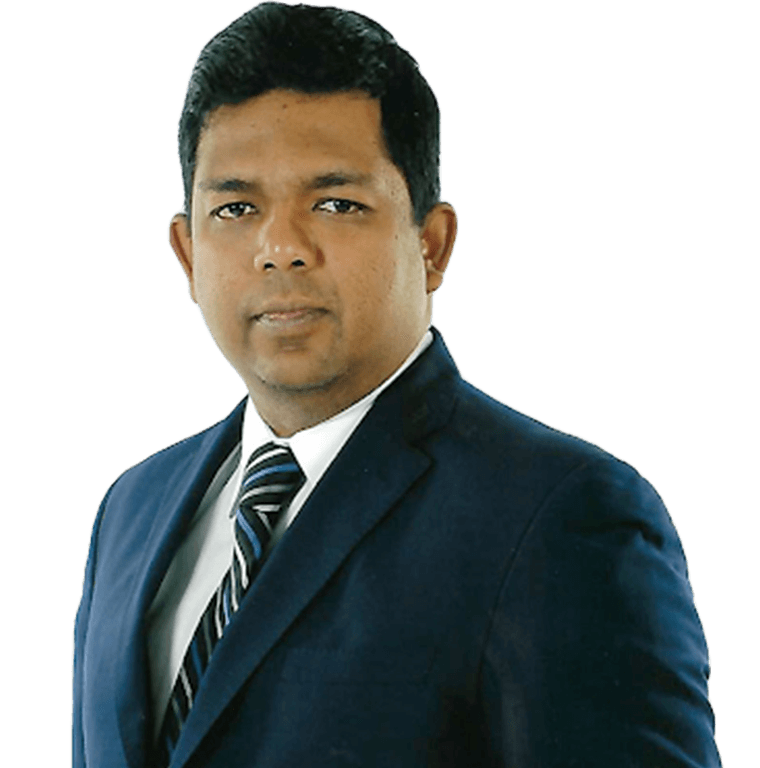
Naren Arulrajah
CEO & Founder, Ekwa Marketing
Naren Arulrajah is the CEO and Founder of Ekwa Marketing, a 300-person dental marketing agency that has helped hundreds of practices grow through SEO, reputation management, and digital strategy. A published author of three books on dental marketing, contributor to Dentistry IQ, co-host of the Thriving Dentist Show and the Less Insurance Dependence Podcast, and a member of the Academy of Dental Management Consultants. He has spent 19 years focused exclusively on helping dental practices succeed online.